What Happens If You Suddenly Stop Your Blood Pressure Medicine?
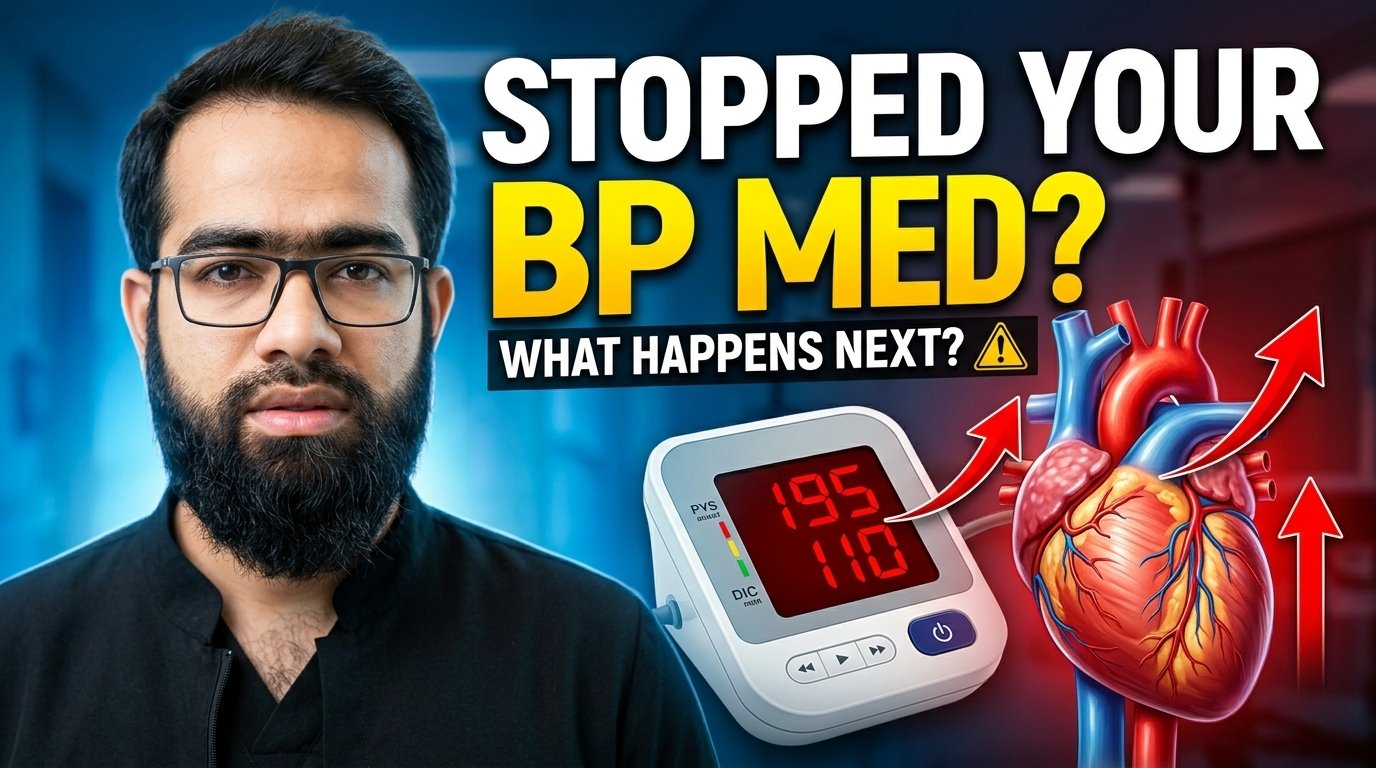
1. The Underlying Mechanism and Clinical Rationale
**1. What Happens When You Stop Blood Pressure Medicine?** Blood pressure treatment works by reducing one or more factors that contribute to hypertension, such as: • A) Vascular resistance • B) Sympathetic nervous system activity • C) Heart rate and cardiac workload • D) Sodium and fluid retention • E) Renin-angiotensin-aldosterone system activity When treatment is stopped, the underlying cause of hypertension does not necessarily disappear. Therefore, blood pressure may gradually return to its previous level. In some patients, however, stopping particular medicines abruptly can result in a rapid rise in blood pressure, known as rebound hypertension. The American Heart Association advises patients not to reduce or stop prescribed blood pressure medication without first discussing it with a healthcare professional—even when home readings appear normal.
**2. Why Can Blood Pressure Rise Again?** A common misunderstanding is that blood pressure medicine “cures” hypertension permanently. Most antihypertensive medicines control blood pressure while they are being taken. They do not necessarily eliminate the underlying tendency toward hypertension. For example, if a patient has chronic hypertension and their BP becomes 125/78 mmHg while taking medication, this does not automatically mean the hypertension has disappeared. The medication may be one of the reasons the BP is 125/78. After stopping treatment, blood pressure may increase again. The AHA specifically warns that people may discontinue medication when their blood pressure numbers improve, even though the medication may be responsible for keeping those numbers controlled.
**3. What Is Rebound Hypertension?** Rebound hypertension means a significant increase in blood pressure after reducing or abruptly stopping certain medications. It is particularly associated with medications that influence sympathetic nervous system activity. Clinically important examples are: 1) Abrupt discontinuation of clonidine can cause: • A) Rapid elevation of blood pressure • B) Tachycardia • C) Headache • D) Nervousness • E) Agitation • F) Increased sympathetic activity Severe cases of rebound hypertension following abrupt clonidine withdrawal have been associated with serious complications, including hypertensive encephalopathy and stroke. The FDA prescribing information recommends gradual tapering rather than abrupt discontinuation. 2) Abrupt discontinuation of beta-blockers: • a) Metoprolol • b) Propranolol • c) Atenolol • d) Bisoprolol • e) Carvedilol • f) Nadolol should generally not be stopped abruptly after chronic therapy, particularly in patients with ischemic heart disease. Abrupt withdrawal can increase sympathetic activity and may worsen angina; in susceptible patients, serious ischemic events including myocardial infarction have been reported.
**4. Does Every Blood Pressure Medicine Cause Rebound Hypertension?** This is an important clinical distinction. Not every antihypertensive produces the same withdrawal phenomenon. For many commonly used agents, such as: • A) ACE inhibitors • B) ARBs • C) Calcium-channel blockers • D) Thiazide-type diuretics the main concern after stopping is generally loss of blood pressure control, rather than the classic withdrawal/rebound syndrome associated with drugs such as clonidine or beta-blockers. However, the decision to stop any antihypertensive should be individualized. The medication class, indication, dose, treatment duration, comorbidities, current BP, heart rate, renal function, electrolytes and other medicines all matter. The AHA emphasizes that antihypertensive medicines have different mechanisms and that medication changes should be discussed with a healthcare professional.
**5. What Symptoms Can Occur After Suddenly Stopping?** Some patients may experience no immediate symptoms. That does not necessarily mean that stopping the medicine is safe. • Rising blood pressure • Headache • Palpitations • Tachycardia • Anxiety or nervousness • Dizziness • Chest discomfort • Flushing • Tremor • Worsening of the underlying cardiovascular condition Symptoms vary considerably depending on the medication and the patient's clinical condition. With clonidine withdrawal, for example, rapid BP elevation, tachycardia, headache, nervousness and agitation are specifically described in FDA labeling.
**6. What Can Happen to the Heart?** Persistently uncontrolled hypertension increases the workload on the heart. If blood pressure rises significantly after stopping treatment, the cardiovascular system may experience additional stress. Long-term uncontrolled hypertension is associated with: • Left ventricular hypertrophy • Coronary artery disease • Heart failure • Stroke • Chronic kidney disease Abrupt beta-blocker withdrawal is particularly concerning in patients with underlying ischemic heart disease because it can worsen myocardial oxygen demand and precipitate angina or other ischemic complications. Severely elevated blood pressure can become an emergency when accompanied by acute target-organ damage.
2. Pharmacological Dynamics and Patient-Specific Factors
**Potential Neurological Complications Include:** • A) Intracerebral hemorrhage • B) Ischemic stroke • C) Hypertensive encephalopathy • D) Acute neurological deterioration Importantly, a high BP number alone does not establish hypertensive emergency. The presence or absence of acute target-organ injury is clinically critical. The 2025 AHA/ACC guideline describes severe hypertension in nonpregnant adults as BP >180/120 mmHg and emphasizes assessment for acute target-organ damage.
**Renal Considerations & Comorbidities:** The kidneys play a major role in blood pressure regulation. Uncontrolled hypertension can damage renal blood vessels and contribute to chronic kidney disease. Conversely, kidney disease can also make blood pressure more difficult to control. Therefore, stopping antihypertensive therapy without appropriate clinical review can be particularly concerning in patients who already have: • A) Chronic kidney disease • B) Proteinuria/albuminuria • C) Diabetes • D) Heart failure • E) Established cardiovascular disease Treatment decisions in these patients should be individualized rather than based solely on a single BP reading.
**“But My Blood Pressure Is Normal Now…”** This is one of the most common reasons patients stop treatment. • Before treatment: 165/100 mmHg • After treatment: 125/78 mmHg “My BP is normal, so I am cured.” But the more accurate interpretation may be: “My BP is controlled because my treatment is working.” The AHA recommends continuing prescribed medication unless a healthcare professional advises otherwise. Home monitoring can help assess treatment effectiveness, but it does not replace clinical follow-up.
**Missing a Dose vs. Stopping Treatment:** Missing one dose is not necessarily the same as intentionally stopping treatment. The correct response depends on: • A) Which medication was missed • B) How long ago the dose was due • C) The prescribed dosing schedule • D) The patient's clinical condition Patients should follow the medication-specific instructions provided by their prescriber or pharmacist. Do not automatically take a double dose to compensate for a missed dose. If there is uncertainty, contact a pharmacist or prescribing clinician for medication-specific advice.
**Q: What If You Want to Stop Because of Side Effects?** Do not simply stop the medication without discussing the problem. Instead, tell your doctor or pharmacist about the side effect. Possible solutions may include: • A) Dose adjustment • B) Changing the dosing time • C) Switching to another medication • D) Using another medication class • E) Adjusting other medicines that may contribute to the problem • F) Monitoring BP more closely There are many classes of antihypertensive medicines, so intolerance to one medicine does not necessarily mean that treatment cannot be continued with another approach.
**Q: What If the Blood Pressure Is Too Low?** Low BP, dizziness, fainting or excessive weakness should also not automatically lead to permanent discontinuation. The healthcare professional may need to determine: • a) Whether the BP measurement is accurate • b) Whether dehydration is present • c) Whether another medication is contributing • d) Whether the dose is excessive • e) Whether the treatment regimen needs adjustment For patients experiencing recurrent symptomatic hypotension, medication review is particularly important.
**Q: Which Patients Need Extra Caution?** Abrupt medication changes deserve particular caution in patients with: • A) Coronary artery disease • B) Previous myocardial infarction • C) Heart failure • D) Arrhythmias • E) Chronic kidney disease • F) Diabetes • G) Previous stroke • H) Resistant hypertension • I) Multiple antihypertensive medications • J) Very high baseline BP • K) Pregnancy or postpartum hypertension Medication withdrawal should be individualized in these higher-risk groups.
**Q: When Is Very High Blood Pressure an Emergency?** A very high BP reading should not be interpreted in isolation. According to the 2025 AHA/ACC guideline, BP >180/120 mmHg represents severe hypertension in nonpregnant adults and requires appropriate evaluation, particularly for evidence of acute target-organ damage. Seek urgent medical evaluation if very high blood pressure is accompanied by symptoms such as: • a) Chest pain • b) Severe shortness of breath • c) New weakness or numbness • d) Difficulty speaking • e) Confusion • f) Severe or unusual headache • g) Vision changes • h) Loss of consciousness • i) Other signs suggesting acute organ injury Do not attempt to manage potentially life-threatening symptoms by simply taking extra doses of medication unless specifically instructed by a healthcare professional.
**Essential Patient Guidance:** • Take your medication exactly as prescribed. • Monitor your BP when recommended. • Keep a record of your readings. • Tell your healthcare professional about side effects. • Ask before changing the dose. • Ask before stopping a medication. • Keep an updated list of all medicines and supplements. • Tell your pharmacist or doctor about OTC medicines and supplements. The AHA recommends home BP monitoring for people diagnosed with hypertension and emphasizes that home readings should not be used as a reason to stop medication without professional advice. **What NOT to Do:** • Stop medication simply because you feel well. • Stop medication because one BP reading is normal. • Double a dose without appropriate instructions. • Share your medication with another person. • Replace prescribed treatment with unproven supplements. • Assume that all BP medicines can be stopped in the same way.
**Information for Doctors, Consultants, RMOs, Nurses & Pharmacists:** When discontinuation of antihypertensive therapy is being considered, evaluate the indication for therapy, medication class, dose, duration, comorbidities and risk of withdrawal. Clinical review should include: • A) Clinic BP • B) Home BP • C) Orthostatic BP when indicated • D) Recent trends rather than a single reading • E) Drug name, class, dose, frequency, duration, adherence, recent changes • F) OTC medicines, supplements, potential interactions
- High-Yield Point: Monitor therapeutic response with standardized laboratory benchmarks.
- Risk Mitigation: Implement routine medication reconciliation to eliminate adverse drug events.
- Patient Empowerment: Communicate clear, jargon-free instructions to enhance therapy compliance.
3. Practical Clinical Applications and Safety Guidelines
**Identify Withdrawal-Risk Medications:** Particular attention should be paid to medications with established withdrawal profiles. The AHA hypertension guideline specifically advises avoiding abrupt beta-blocker cessation and abrupt clonidine discontinuation. High-risk patient groups requiring structured clinical monitoring include: • a) CAD • b) Heart failure • c) Arrhythmia • d) CKD • e) Diabetes • f) Previous stroke / TIA • g) Resistant hypertension Depending on the clinical situation, safe discontinuation plans should include: • a) Home BP monitoring • b) Heart-rate monitoring • c) Follow-up appointment • d) Laboratory monitoring when relevant • e) Medication adjustment or gradual tapering where appropriate
**Why Medication Adherence Matters:** Hypertension treatment is often long-term because the underlying cardiovascular risk may persist even when the patient feels completely well. The goal is not simply to make the patient “feel better.” The goal is to reduce the long-term risk of: • A) Stroke • B) Heart attack • C) Heart failure • D) Kidney disease • E) Cardiovascular death The 2025 AHA/ACC hypertension guideline emphasizes accurate BP measurement, lifestyle intervention, appropriate pharmacotherapy and ongoing monitoring to improve BP control.
**Can Lifestyle Changes Ever Reduce the Need for Medication?** Yes—in some patients, lifestyle improvements can substantially improve blood pressure and cardiovascular risk. Evidence-based lifestyle measures include: • A) Achieving or maintaining a healthy weight • B) Regular physical activity • C) A heart-healthy eating pattern such as DASH • D) Reducing dietary sodium • E) Appropriate dietary potassium intake when medically suitable • F) Managing stress • G) Avoiding or reducing alcohol • H) Not smoking The 2025 AHA/ACC guideline strongly recommends lifestyle interventions for prevention and treatment of elevated BP and hypertension. Lifestyle improvement does not automatically mean that medication can be stopped. If BP improves significantly, the appropriate approach is to discuss treatment adjustment with the prescribing clinician.
**Summary of Discontinuation Risks:** Stopping antihypertensive therapy suddenly can lead to: • A) Loss of BP control • B) Rebound hypertension with certain medicines • C) Increased cardiovascular stress • D) Withdrawal symptoms with specific drugs • E) Potentially serious complications in high-risk patients Do not stop, reduce or change your blood pressure medicine without discussing it with your doctor or pharmacist. *This article is intended for medical education and general health information. It does not replace an individualized assessment by a physician, pharmacist or other qualified healthcare professional.*
Key Clinical Takeaways
- What Happens If You Suddenly Stop Your Blood Pressure Medicine? requires thorough evaluation of biological mechanisms and individualized patient risk factors.
- Therapeutic monitoring and proactive adverse effect mitigation are essential for optimizing treatment outcomes.
- Interprofessional collaboration between physicians, clinical pharmacists, and nursing staff enhances patient safety.
- Educating patients with simplified, transparent healthcare knowledge improves long-term medication compliance.
Frequently Asked Questions
Can I stop my BP medicine if my BP becomes normal?
A normal reading may indicate that the medication is effectively controlling your blood pressure.
Can stopping BP medicine suddenly cause a stroke?
It can increase risk in certain circumstances, particularly when abrupt discontinuation causes severe hypertension or when the patient has significant underlying cardiovascular risk. Clonidine withdrawal, for example, has been associated with severe rebound hypertension and serious neurological complications.
Does every BP medicine cause rebound hypertension?
Classic rebound/withdrawal concerns are particularly important with drugs such as clonidine and beta-blockers. Other antihypertensive medicines may primarily lead to loss of BP control after discontinuation rather than a classic withdrawal syndrome.
Should beta-blockers be stopped suddenly?
Abrupt beta-blocker withdrawal can be particularly hazardous in patients with ischemic heart disease and may worsen angina or precipitate serious cardiovascular events.
What happens if I stop clonidine suddenly?
Clonidine can cause rebound hypertension, with symptoms such as rapid BP elevation, tachycardia, headache, nervousness and agitation. Clonidine should generally be tapered according to an appropriate clinical plan rather than stopped abruptly.
If I feel fine, can I stop my medicine?
No—not without professional advice. High blood pressure frequently has no symptoms.
What should I do if my BP is normal after taking medicine?
Continue the prescribed treatment unless your healthcare professional advises a change. Keep monitoring BP as recommended and discuss your readings during follow-up. Never assume that a normal BP reading means hypertension has disappeared. Your medication may be the reason your blood pressure is controlled.
Why is understanding What Happens If You Suddenly Stop Your Blood Pressure Medicine? critical for healthcare providers and patients?
Clear comprehension of pharmacological pathways and clinical guidelines enables safer prescribing, minimizes preventable adverse drug events such as rebound hypertensive crises or strokes, and ensures patients understand the purpose and safety of their therapy.
What are the primary clinical monitoring parameters for this therapy?
Routine home blood pressure monitoring, ambulatory monitoring, heart rate tracking, assessment for acute target-organ damage, medication reconciliation, and monitoring renal function/electrolytes.
How does Dr. Ahmed Mujtaba approach patient education for this topic?
By breaking down complex molecular mechanisms into intuitive clinical pearls and actionable patient guidance, enhancing agency and adherence.